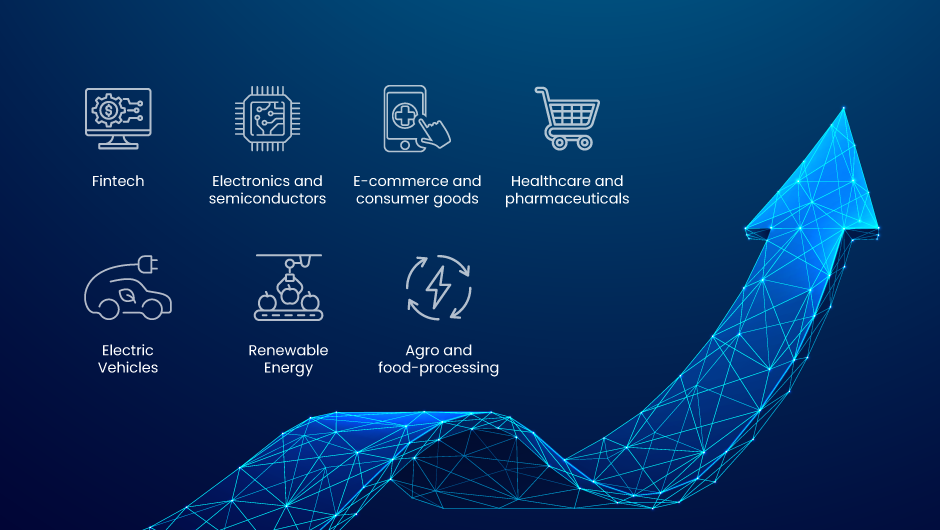
High-growth sectors in emerging markets are attracting global capital as economies transition from developing to middle-income status. Investors and companies are eyeing these industries for their rapid expansion, digital adoption, and long-term potential. This article explores the top high-growth sectors in emerging markets, why they matter, and the trends driving growth in 2025 and beyond.
Read Also: Google Gemini and User Preferences
What Are Emerging Markets?
Emerging markets refer to economies transitioning from lower‑income to more advanced, middle‑income status. These nations often exhibit strong growth dynamics, rapid urbanization, and rising consumer demand. Examples include India, Indonesia, Vietnam, Brazil, South Africa, and Mexico.
Key advantages of emerging markets:
- Large and youthful populations
- Fast‑growing middle class
- Improving infrastructure
- Digital adoption leapfrogging developed markets
- Competitive labor costs
These factors drive sector‑specific growth that can outperform developed peers.
Read Also: Ukraine Launches U.S.-Made Missiles
Technology and Digital Services
Why It’s a Top High‑Growth Sector
Emerging economies are bypassing legacy infrastructure, adopting digital solutions at record pace. Smartphone penetration, internet access, and digital payment adoption have surged, creating fertile ground for technology companies.
Key trends:
- Mobile‑first consumers
- FinTech disruption
- Cloud computing expansion
- Localized platforms catering to regional needs
Sub‑sectors fueling growth
- FinTech & Digital Payments: With low banking access in many emerging markets, digital wallets and online lending platforms fill a massive gap.
- E‑Commerce: Online retail adoption grew rapidly, enabled by increased connectivity.
- Enterprise Software: SMEs leverage cloud tools to scale faster.
Opportunities for investors
- Early‑stage tech ecosystems
- Partnerships between global and local tech firms
- Digital infrastructure build‑outs
Read Also: Silicon Valley: Birthplace of Tech Giants
Renewable Energy and Clean Tech
Powering the Future of Emerging Nations
As global demand for energy rises, emerging markets are turning to renewables to meet climate goals and reduce dependence on imported fossil fuels. Solar, wind, and battery storage projects are attracting foreign investment, policy support, and public‑private partnerships.
What’s driving growth
- Government incentives and net‑zero commitments
- Falling cost of renewable technologies
- Rising energy demand from urbanization
- Distributed energy solutions in remote areas
Top segments in clean tech
- Solar power installations
- Wind farm development
- Energy storage (batteries, microgrids)
- Electric vehicles (EVs) and charging networks
Emerging economies like Chile, India, and Morocco are rapidly deploying clean energy at scale, creating global investment pipelines.
Infrastructure Development
Building the Backbone of Economic Growth
Physical infrastructure remains a major priority in emerging markets. Governments and private investors are pouring capital into transportation networks, logistics hubs, water systems, and telecommunications.
Growth drivers
- Belt and Road initiatives
- Urban population growth
- Trade facilitation needs
- Smart city development
Segments with high potential
- Roads and highways
- Ports and rail systems
- Airports
- Broadband and 5G deployment
Infrastructure expansions not only support other sectors but also create jobs and raise productivity — core metrics for economic uplift.
Healthcare and Life Sciences
Meeting Soaring Demand for Health Services
Healthcare spending in emerging markets is rising due to aging populations, greater chronic disease prevalence, and expanding insurance coverage.
Areas with rapid growth
- Telemedicine and digital health platforms
- Pharmaceuticals and vaccines manufacturing
- Diagnostic labs and imaging services
- Health insurance products
Healthcare innovation in places like India, Brazil, and Southeast Asia is unlocking new access points for consumers who were previously underserved.
Consumer Goods and Middle‑Class Spending
Riding the Wave of Consumption
One of the biggest narratives in emerging markets is the rapid expansion of the middle class. As disposable incomes rise, consumers shift from basic necessities to discretionary goods.
High‑growth categories
- Packaged foods and beverages
- Personal care and beauty products
- Consumer electronics
- Fast‑moving consumer goods (FMCG)
Brands that can localize products and pricing strategies create deeper market penetration and long‑term customer loyalty.
Agriculture and Agri‑Tech
Feeding a Growing Global Population
Emerging markets have comparative advantages in agriculture. Combining this with technology—such as precision farming, drones, and AI analytics—boosts yield and resilience.
Key growth segments
- Smart irrigation and soil monitoring
- Crop science and bio‑inputs
- Supply chain traceability
- Value‑added processing
As food security becomes a priority, investment in agriculture tech accelerates.
Financial Services Beyond Traditional Banking
Expanding Access to Capital
Traditional banking infrastructure is limited in many emerging markets, but digital finance is bridging the gap. Beyond FinTech, alternative lending, microfinance, and SME credit platforms are expanding rapidly.
Growth catalysts
- Regulatory modernization
- Mobile wallets
- Data‑driven credit scoring
- Blockchain and crypto‑enabled solutions
Financial inclusion leads to broader economic participation and resilience.
How to Evaluate High‑Growth Sectors
When analyzing emerging markets, it’s important to assess:
- Regulatory environments
- Political stability
- Currency risk
- Infrastructure readiness
- Talent availability
- Market size and growth trajectory
Diversification across sectors and geographies can mitigate risk and optimize return potential.
Conclusion: Why These Sectors Matter
Emerging markets are reshaping the global economic landscape. From digital transformation to infrastructure build‑outs and sustainable energy transitions, the sectors above represent long‑term growth engines. Investors, entrepreneurs, and policymakers alike benefit from understanding where demand is accelerating and how capital can be deployed effectively.
Riding the next wave of global growth means looking beyond developed markets and tapping into economies on the rise.